Repair or Replace? How to Tell What Your Roof Actually Needs
By MATCHWORK™ Roofing & Exteriors ·
A leak or a few missing shingles does not automatically mean a new roof, and a roof that looks fine from the street is not always fine. The honest answer depends on two things: how far the problem reaches, and how much life the rest of the roof has left.
Repair when the problem is in one place and the rest of the roof is sound. Replace when the wear is spread across the roof, the deck underneath is failing, or the fixes keep piling up. Many leaks come from a failed flashing or pipe boot, which is a repair, not a reason to re-roof.
1. Start With Where the Problem Is
CertainTeed's installation manual notes that leaks most often start at a flashing that failed or was installed wrong, at places like sidewalls, chimneys, valleys and pipes. That matters, because a leak at one chimney or one plumbing vent can usually be fixed right there. The question to ask first is not "how old is the roof" but "is this problem in one spot, or is it everywhere?"
2. When a Repair Makes Sense
Usually a repair
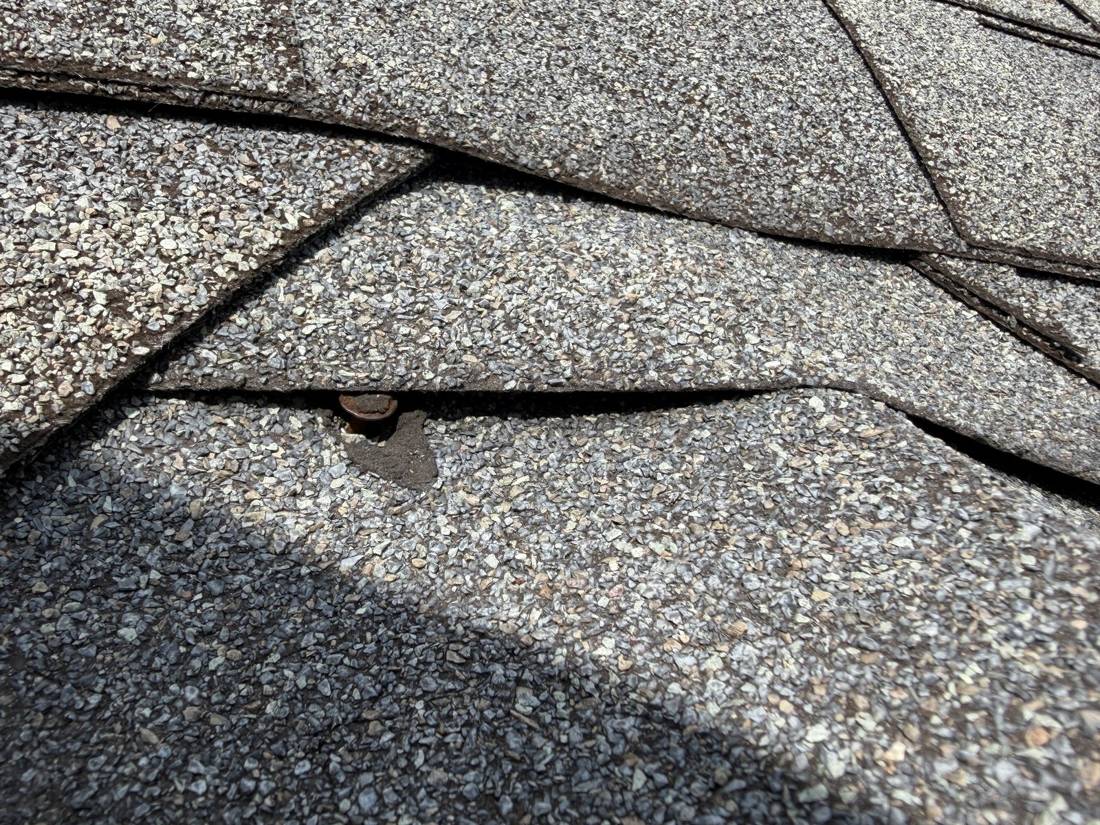
- • A few shingles lifted, creased or blown off in one area
- • A cracked pipe boot or a loose flashing at one wall or chimney
- • A nail pop or a single damaged shingle
- • Storm damage limited to one slope, on a roof with good years left
Usually a replacement
- • Granule loss, cracking or curling across most slopes
- • A deck that sags between rafters or is soft or rotted in many places
- • Repeated leaks in different spots, or a history of patches
- • Damage spread across several slopes at once
A proper shingle repair is more than nailing a new piece on top. CertainTeed's manual describes breaking the seal on the damaged shingle and the two courses above it, pulling every nail that holds the damaged piece, replacing any damaged underlayment, sliding in a new shingle of the same size, design and color, re-nailing, and hand-sealing every tab that was lifted. On an older roof the new shingle may look different at first, and if your shingle has been discontinued, finding the same size and design gets harder. Both are worth asking about before a repair is scheduled.
3. When Replacement Is the Better Call
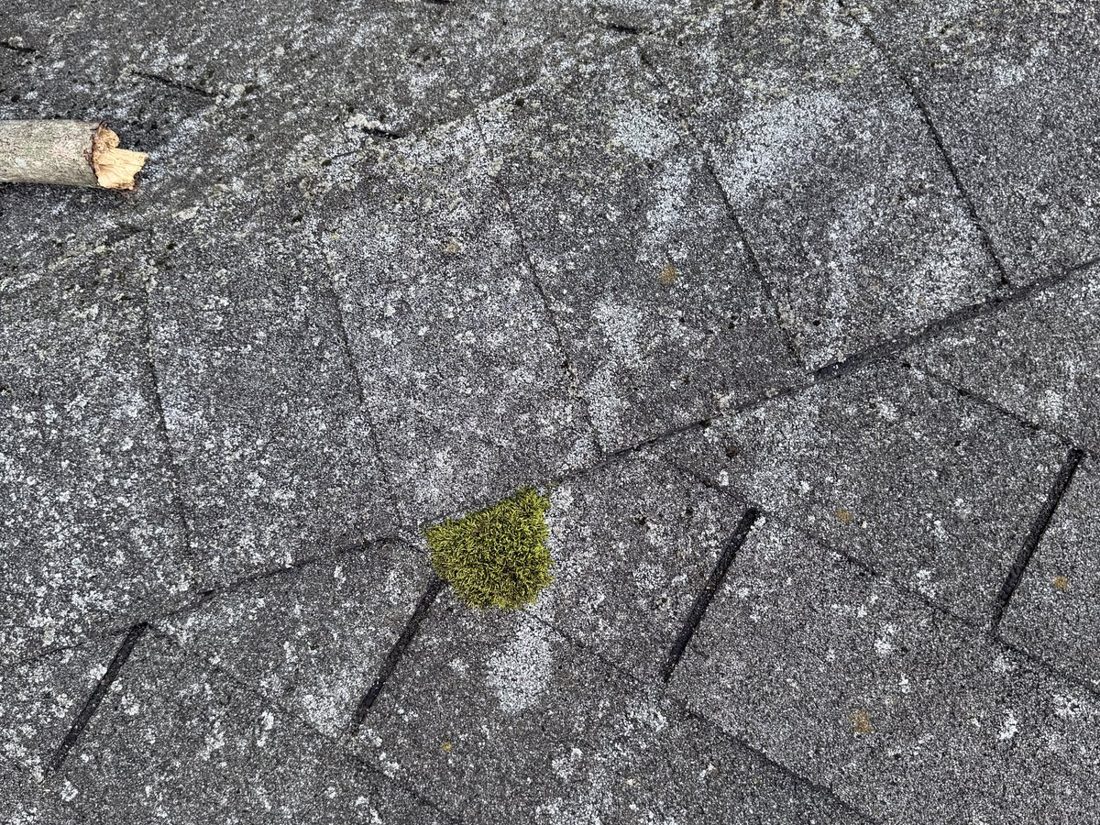
Granules shield the asphalt in a shingle from the sun. When they wear thin across the whole roof, the shingles are near the end of their service life, and patching one area only moves the next problem somewhere else. CertainTeed's homeowner guidance lists curling shingles, granule loss and sagging among the warning signs of a roof that is deteriorating.
What is under the shingles counts too. CertainTeed's manual tells contractors to check the attic before re-roofing: if the rafters or the sheathing sag, or if signs of rot and moisture are widespread, the roofing has to come off and the structure has to be repaired first.
4. Why Laying New Shingles Over Old Is Rarely the Answer
A "roof-over" puts a new layer on top of the old one. Ohio's residential code does not allow it when the existing roof is water-soaked or too deteriorated to be a good base, or when there are already two or more layers. A full replacement removes the roofing down to the deck.
CertainTeed's manual goes further: it calls for removing existing architectural (dimensional) shingles before new shingles go on, and it points out that a tear-off reveals deck problems that would otherwise stay hidden. A tear-off also lets the ice barrier, underlayment, drip edge and flashings be replaced instead of covered over. We walk through each of those parts in What Goes Into a Complete Roof System.
5. What You Can Check Yourself
- From the ground: missing or lifted shingles, curled or cracked edges, and granules collecting in gutters or at downspouts. Binoculars help. Stay off the roof.
- In the attic: water stains on the sheathing or rafters, damp insulation, daylight around pipes, and any sag between rafters.
- Inside: ceiling stains, especially along exterior walls and below chimneys or bathrooms.
If a storm came through before the problem showed up, start with our guide to spotting hail damage and our storm damage page. Either way, a roofer should be able to show you photos of exactly what they found and explain why it calls for a repair or a replacement.
Where these facts come from
- 2019 Residential Code of Ohio, re-roofing (Ohio Administrative Code 4101:8-9-01), sections 908.3 and 908.3.1.1. Read the rule.
- CertainTeed Shingle Applicator's Manual, 17th edition (2026): repairing shingles (chapter 1), product fundamentals (chapter 2), inspecting the roof and roof-overs (chapter 4), flashing (chapter 2).
- CertainTeed: Fall Roof Readiness: Protect Your Home Before the Weather Turns and What Type of Maintenance Does my Roof Require?
Related guides
Not Sure Which One You Need?
MATCHWORK™ inspects the roof, shows you photos of what we found, and explains whether it calls for a repair or a replacement.
Request an Inspection