We Hold Carriers to the Ohio Matching Rule Storm damage roofing in Central Ohio
That rule is where the name MATCHWORK™ comes from. When a storm repair cannot be made to match the rest of your roof and your policy pays replacement cost, Ohio's claim rules call for the insurer to replace as much of it as it takes to reach a reasonably comparable appearance. We document every item of wind and hail damage, write the full scope line by line in the same estimating software carriers use, meet your adjuster on the roof, and show in writing where the carrier's estimate comes up short.
Request an Inspection
Bring your carrier's estimate, a letter that says no damage, or just the storm date. Any one of them is enough to start.
A CertainTeed ShingleMaster™ roofing contractor
Ohio Wrote a Rule About Matching. We Named the Company After It.
A storm claim goes thin in a predictable place. The carrier pays to replace the shingles that are plainly damaged and leaves the rest, and the new shingles do not match the roof that stayed. Ohio wrote a standard for that moment. It is one sentence in the state's claim-handling rules for insurers, and it applies to policies that pay on a replacement cost basis.
Here is what it means for your roof. Manufacturers retire shingle lines and change sizes and colors, and every roof weathers in the sun. If your shingle is no longer made, or the closest shingle still available is a different size or color, a patch will not look like the roof around it. When that is the case, the rule calls for more than the patch: as much replacement as it takes to reach a reasonably comparable appearance. Depending on the roof, that can mean a full slope or every slope. That is not a favor. It is already in the book.
The rule runs on proof, not on a contractor's say-so. Matching is a documentation problem, and we treat it like one. An independent lab identifies your shingle and reports whether it is still made. When the lab names a closest available shingle, we put that shingle on your roof and photograph it next to yours, from the roof and from the yard. Then the lab report, the photos, our estimate and the rule itself go in front of your carrier. That documentation is our work, and we do not hand it to you to carry alone. See how shingle identification and match testing work.
Ohio Adm. Code 3901-1-54(I)(1)(b)
“When an interior or exterior loss requires replacement of an item and the replaced item does not match the quality, color or size of the item suffering the loss, the insurer shall replace as much of the item as to result in a reasonably comparable appearance.”
- 1. Quality, color or size. Any one of the three can make a repair shingle a mismatch.
- 2. As much of the item as it takes. The measure is the result, not the fewest shingles that cover the damage.
- 3. A reasonably comparable appearance. It is judged by how the roof looks, which is why we photograph the match test from the yard as well as from the roof.
- 4. And the damage a repair causes. Paragraph (I)(1)(a) of the same rule counts physical damage caused by making the repair as part of the loss, unless the policy excludes it. Older shingles can crack when they are lifted to slide in a new one.
Ohio Administrative Code rule 3901-1-54, paragraph (I)(1), for policies that pay losses on a replacement cost basis. Read the full rule at codes.ohio.gov.
How It Works
A Storm Claim, Start to Finish
This is the whole process in the order it happens, including how we push back, with proof, when the carrier's first answer is short or is no.
Before You File
Inspection and Full Photo Documentation
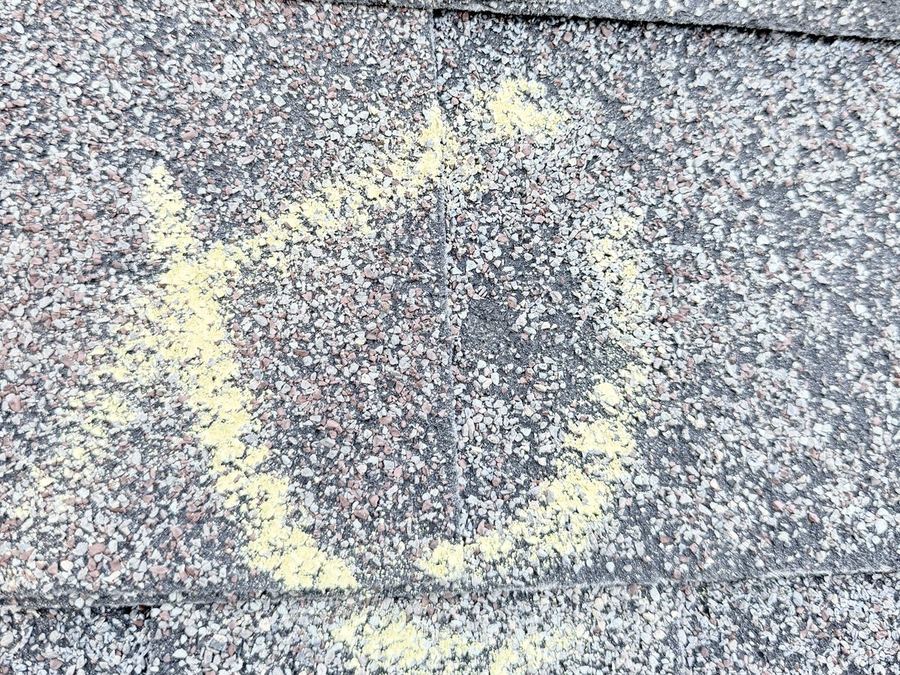
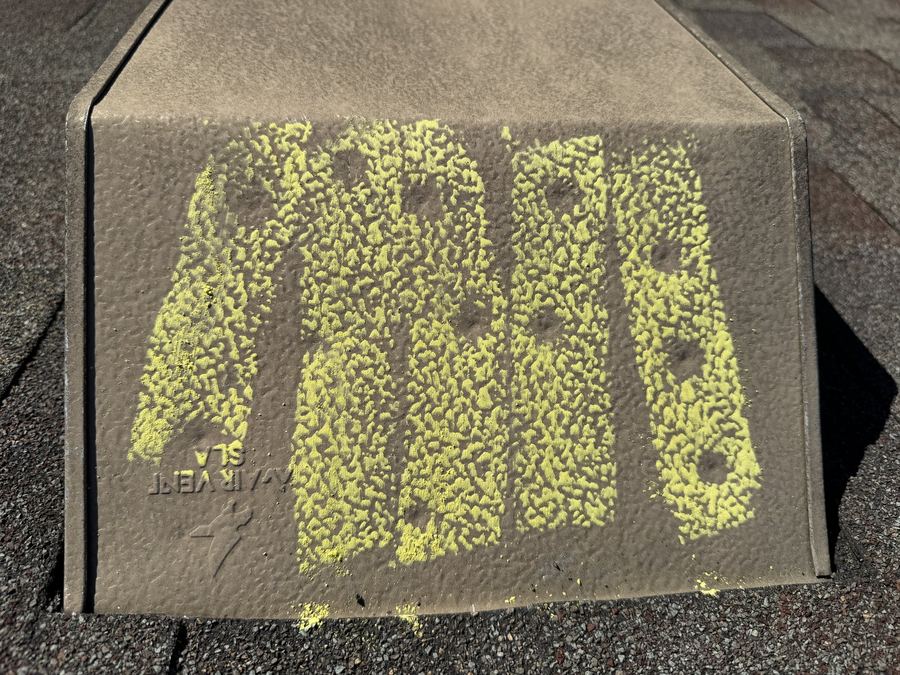
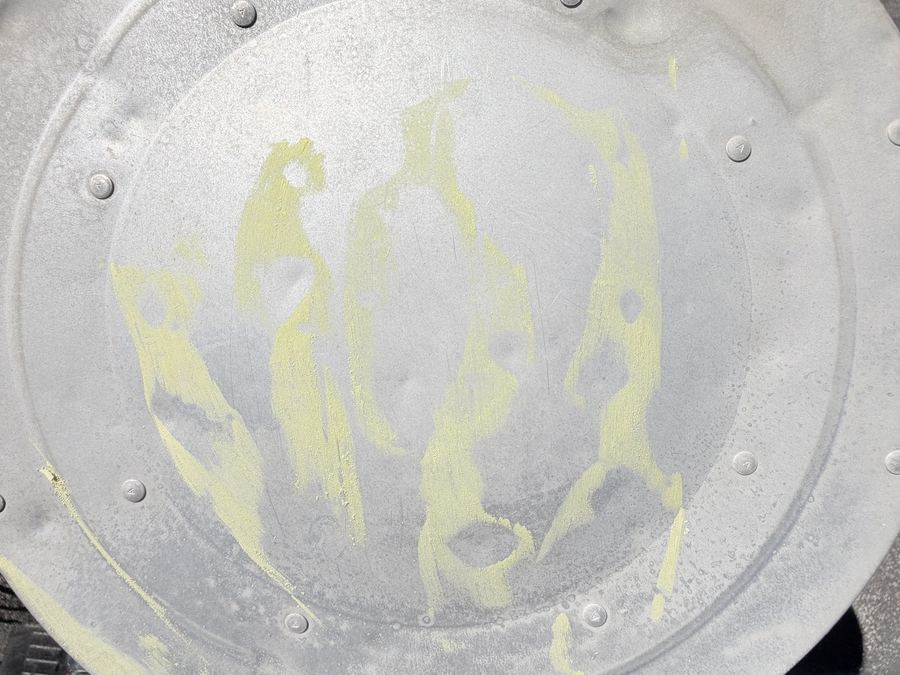
We inspect every slope and photograph it: wide shots that show which house and which slope, then close-ups. For hail, we chalk a 10 ft by 10 ft test square on each slope direction, the Haag test-square method adjusters and engineers use, check every shingle inside it by hand, and count the hail-damaged shingles. Blisters, scuffs and nail pops are photographed and labeled as what they are, so the hail count holds up. For wind, we photograph each creased, torn or missing shingle where it sits. Then the soft metals (vents, flashing, gutters) and the collateral around the property, because soft metals dent at lower hail energy than shingles and help confirm the storm. If we do not find storm damage, we tell you so before you file anything.
The Proof-of-Damage Report
Everything goes into one report built so an adjuster can check it in minutes: numbered, captioned photos, the test-square count for every slope, and the public NOAA storm reports for the date of loss with their distance from your home. The photos are numbered so our estimate can cite photo 14 instead of describing it.
Filing the Claim
You file the claim, because it is your policy. Before you call, we go over what your carrier will ask for: the date of the storm, what was damaged, and the documentation that is ready to send. The claim is yours. The proof is our job.
With Your Carrier
We Meet Your Adjuster on the Roof
We are on the roof when your adjuster inspects, with the measurement report and our counts in hand. We show the test squares and the items that are easy to miss: step and wall flashing nailed through with the shingles (it cannot be reused), a second layer at the roof edge, the pitch on a gauge. The goal is agreement on facts: what is damaged, how many, how long. Adjusters see a lot of roofs. A documented one is easier to get right the first time.
The Carrier's Estimate, Read Line by Line
We write the full scope as a line-by-line estimate in the same software carriers use, Xactimate and Symbility. When the carrier's estimate arrives, we rebuild it line for line in the carrier's own order and set the two side by side, comparing the item, the quantity and the work on every line, not just the totals. Same software, same line items: every difference between the two estimates sits on a line anyone can check.
Supplements for What Was Missed
What the carrier's estimate left out or undercounted goes back to the adjuster as a supplement. Every added line is marked and carries a note: why the work is needed, where the quantity came from, and which photo shows it. Code-required items cite the Residential Code of Ohio by section. Items the shingle manufacturer requires cite the installation instructions. It goes as one package, not a pile of attachments.
Shingle Identification and the Matching Rule
When the carrier offers a repair on a roof whose shingle can no longer be matched, we arrange independent lab identification of the shingle (ITEL), run the match test on the roof, and put the result in front of the carrier with Ohio Adm. Code 3901-1-54(I)(1)(b). More on the match test.
A Reinspection When the Carrier Says No Damage
If the carrier says there is no storm damage and our inspection shows otherwise, the proof-of-damage report and the estimate become a reinspection packet. You ask your carrier in writing for a second inspection with your contractor present. We can draft that request for you to send, and we are on the roof for the reinspection with the test squares marked.
The Build and the Final Paperwork
The Build
We install the roof the estimate describes, as a complete roofing system. Anything hidden that turns up during tear-off, such as damaged decking or a second layer of shingles, is photographed before it is covered and goes to the carrier as a further supplement.
Final Paperwork and Recoverable Depreciation
Many policies hold back part of the payment as depreciation until the work is done. When the roof is finished, we send your carrier the final invoice and the completion photos it needs to release the recoverable depreciation, and we follow up until the file is closed.
Line by Line
Where a Carrier's Estimate Comes Up Short
These are the lines we check on every carrier estimate, and the proof we attach when one is missing or short.
Counts and Quantities
Lengths and areas come from the measurement report. Counts come from the roof: every vent, pipe boot and flashing run is counted, photographed and compared with the carrier's number.
Starter and Ridge Cap
Starter strip and hip and ridge cap are their own materials, not leftovers from the waste allowance. We show the arithmetic from the measurement report.
Flashings, Pipe Boots and Vents
The Residential Code of Ohio, section 908.5, requires existing flashings, edgings and vents to be replaced where they are rusted, damaged or deteriorated, and section 908.6 has flashings rebuilt to the manufacturer's installation instructions. Step flashing is nailed through with the shingle courses, so tearing off the shingles bends and punctures it. Our photos show both.
Ice Barrier at the Eaves
Required by the Residential Code of Ohio, section 905.1.2: from the lowest edge of the roof to at least 24 inches inside the outside face of the exterior wall, measured up the slope, and at least 36 inches up from the eave on roofs 8/12 or steeper. One course at the eave can fall short of that. We show the measurement and the math.
Extra Layers and Steep Slopes
A second layer of shingles is photographed at the roof edge. Pitch is read with a gauge on the slope. Both change the labor, so both go in the estimate with their photos.
Corrections Both Ways
If the carrier's estimate pays for something that is not on the roof, or for the wrong size, our estimate says so. Every line we add is work we will do and can photograph.
Already have your carrier's estimate? Send it. We will read it line by line against the roof and show you what it covers and what it leaves out.
Send Us Your EstimateFor the Adjuster
Come Up. The Squares Are Marked.
What reaches your desk from us is one package. Your estimate is rebuilt first, line for line and in your order. Our additions sit below it, marked, each with a note, a quantity source and a photo number. The measurement report and the code sections are in the same package. Every line we add points to a photo, a measurement, a code section or a manufacturer instruction. If it cannot, it is not in the package. Where your estimate pays for something that is not on the roof, ours says so. We will walk any line you want to question. Bring your estimate. We will bring the ladder and the photos.
Storm Damage and Insurance Questions
My carrier says they can just repair it. Is that right?
A repair is the right answer when it can be made to match. The question is whether it can. We arrange independent lab identification of your shingle (ITEL) to learn whether it is still made and what the closest available shingle is, then test that shingle on your roof and photograph the result. If it does not match in quality, color or size, the lab report, the photos and Ohio Adm. Code 3901-1-54(I)(1)(b) go to your carrier with our estimate for the replacement the rule calls for. See Shingle Matching and Product Identification.
Does the matching rule mean my whole roof gets replaced?
Not automatically. The rule says as much of the item as it takes to reach a reasonably comparable appearance. How far that goes depends on the shingle, the color, the size, and which slopes are seen together. Sometimes a repair shingle truly matches, and a repair is the honest answer. Sometimes the honest extent is wider than the damaged area. We document which one is true on your roof and write that scope.
The adjuster found no damage. Now what?
A first inspection is not always the last word, and sometimes a denial is a documentation problem. We inspect the roof ourselves. If we find storm damage, we build the proof-of-damage report and the estimate, you ask your carrier in writing for a reinspection with your contractor present, and we are on the roof for it. If we do not find storm damage, we tell you that too.
What is a supplement?
An addition to the carrier's estimate: work that was missed or measured short, sent with the photos, the measurements and the code sections that support it. It is a normal part of storm work. A roof can take more than one, because some conditions only show once the old shingles come off.
The carrier's estimate looks complete. Why would it be short?
Because a total can look right while the lines under it are light: starter and ridge cap treated as waste, step flashing left on a wall that is getting new shingles, an ice barrier short of the code distance, a second layer of shingles never counted. None of that shows in the bottom line. That is why we rebuild the estimate line for line instead of comparing totals.
Does the lab report prove hail damage?
No, and it is not meant to. ITEL identifies the shingle: who made it, which product it is, and whether it is still made. It cannot tell you whether a mark is a hail hit; that is answered on the roof, in the inspection photos and the test squares. And a hail count cannot tell you whether your shingle is still made. Two questions, two separate documents.
What is recoverable depreciation?
Many homeowners policies pay a roof claim in two parts. The first payment is the actual cash value: the replacement cost minus depreciation, less your deductible. The depreciation held back is called recoverable when the policy pays it once the work is done and documented. When your roof is finished, we send your carrier the final invoice and completion photos so it can release that amount. Many policies also set a time limit for finishing the work in order to collect it (the Ohio Department of Insurance gives 180 days from the date of loss as an example), so check yours. Some policies pay roofs at actual cash value only, with nothing to recover. The summary page of your carrier's estimate usually shows which you have.
Do I have to use the contractor my carrier suggests?
No. A carrier can suggest contractors from its own program, but you decide who you sign a contract with to work on your home. What a carrier needs from any contractor is a clear scope with proof behind it, which is why our estimate is written in the same software carriers use and every line points to a photo, a measurement or a code section.
Should I call my insurance company first, or have the roof inspected first?
Do not wait on either. The Ohio Department of Insurance tells homeowners to contact their insurance company immediately if they believe the property was damaged, and your policy sets its own rules for reporting a loss. If you already know the roof was hit, report it, and have us out before the adjuster comes so the documentation is ready for that visit. If you are not sure, an inspection tells you whether there is storm damage to report. Either way, write down the storm date and photograph dented gutters, downspouts and anything else you can see safely from the ground. Stay off the roof.
Is MATCHWORK™ a public adjuster?
No. We are a roofing contractor. We do not adjust claims or interpret your policy, and no contractor decides what a carrier pays. Our part is the roof: we inspect it, document every item of damage, write the full scope line by line, cite the code, and put Ohio's matching rule in front of your carrier. You get a copy of everything we send. Be careful with anyone who promises you a new roof before the file is built.
Had a Storm? Get the Roof Documented.
Test squares, numbered photos and a line-by-line scope, ready before the adjuster comes or after the carrier's first answer. Call with the storm date, a carrier's estimate or a letter that says no damage.