Nail Pops Explained: Why Roofing Nails Back Out & Cause Hidden Leaks
By MATCHWORK™ Roofing & Exteriors · · Updated
A nail pop is a roofing nail that has worked its way back up out of the roof deck. It is a small thing, it is hard to see from the yard, and it can let water into a roof that otherwise looks fine. Here is why it happens, what it looks like, how it leaks and what a proper repair is.
Every shingle is nailed through to the wood deck, and each row of nails is covered by the next course of shingles. When one of those nails lifts, its head pushes up on the shingle that covers it. First it makes a bump. In time it can wear a hole through that shingle or hold it up off the roof.
Every photo in this guide was taken by MATCHWORK™ during a real roof inspection. Close-ups only, nothing staged, no stock photos.
1. Why Nails Back Out
A nail holds because the wood grips its shank. Anything that weakens that grip, or leaves the nail sitting high to begin with, sets up a pop.
- Nails left high. A nail that was not driven flush, or went in crooked, sits proud of the shingle from the first day. Nail guns do this when the air pressure is off, and pressure drifts with the temperature. The opposite mistake, a nail driven too deep, cuts into the shingle it was supposed to hold, and CertainTeed warns that a shingle damaged that way is more likely to blow off.
- Nails too short. Shingle makers call for a roofing nail to go 3/4 inch into the deck, or all the way through decking thinner than that. CertainTeed tells installers that when nails fall short, the likelihood of them backing out "is very high." A second layer of shingles laid over an old one needs longer nails and does not always get them.
- Nails that missed solid wood. A nail driven into the gap between two deck boards, the seam between panels, a knot hole or a crack has little to hold it. Older homes with board decking often have gaps between the boards. The same goes for the larger nails that fasten the decking to the rafters: one that missed the rafter can work up and push on the shingles from below.
- Wood that moves. Roof decking swells as it takes on moisture and shrinks as it dries, season after season, and the roof heats and cools every day. That movement slowly works smooth nails upward. A damp, poorly vented attic makes the swings bigger.
- Decking that no longer holds. Wood that has been wet for a long time goes soft, and plywood can separate into layers. Thin decking gives a nail less to grip in the first place. A nail in wood like that will not stay put.
2. What a Nail Pop Looks Like
From the Ground
- • One shingle that sits up a little while the ones around it lie flat
- • A small bump that throws a shadow when the sun is low
- • Through binoculars, a dot of bare metal where a nail head has come through
- • Indoors, a ceiling stain with no obvious damage on the roof above it
On the Roof
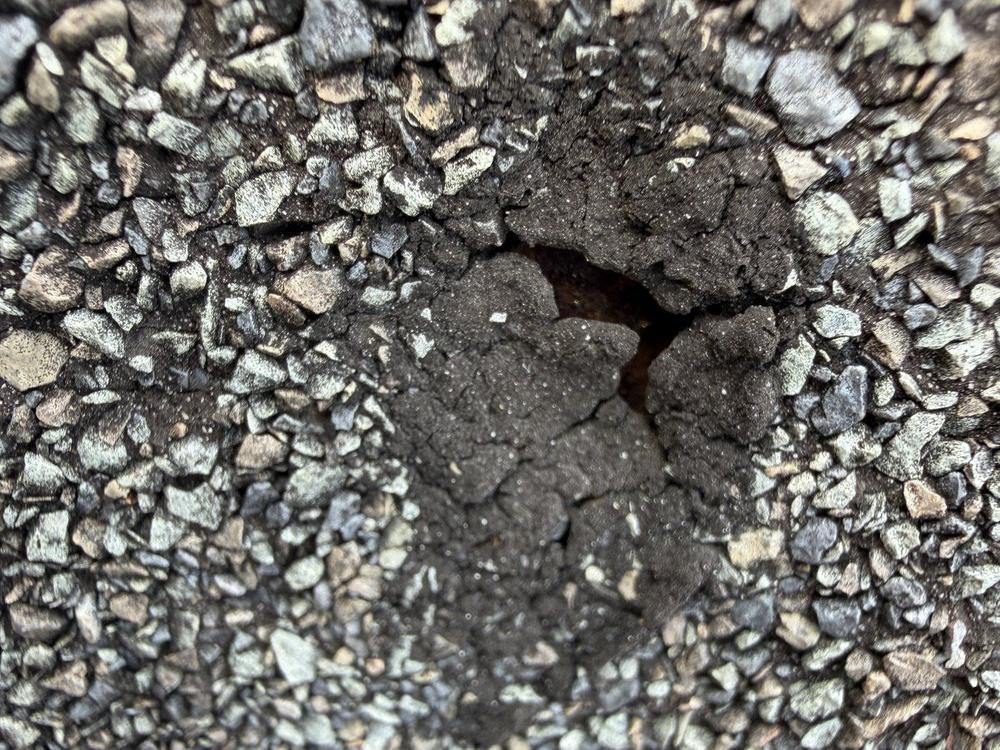
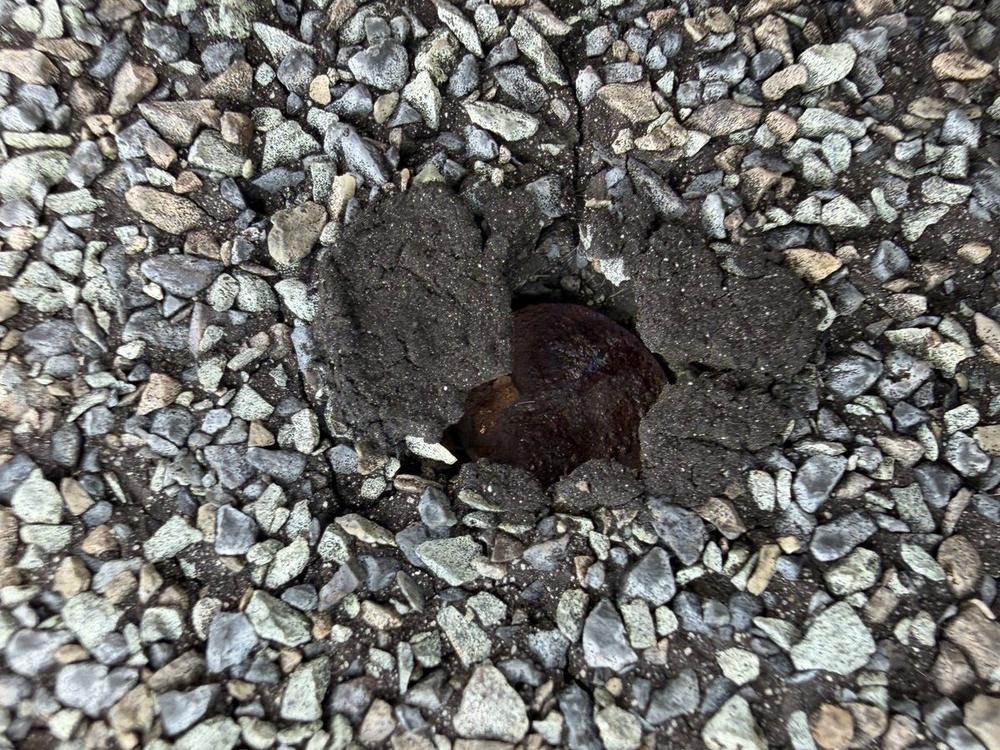
- • A hard raised bump, usually near the bottom edge of a shingle, over the nails of the shingle underneath
- • Granules worn off the top of the bump
- • A nail head showing through a hole or a crack
- • A shingle that has come unsealed because the nail is holding it up
3. How a Nail Pop Leaks
A shingle roof sheds water because every nail is covered by the shingle above it. A popped nail defeats that in two ways. First, the head can push up through the shingle that covers it. That leaves a hole in the exposed face of the roof with a nail running straight down into the deck, and water follows the nail. Second, a nail that holds a shingle up keeps it from sealing to the one below, so wind can get under it and drive rain in or tear the shingle off.
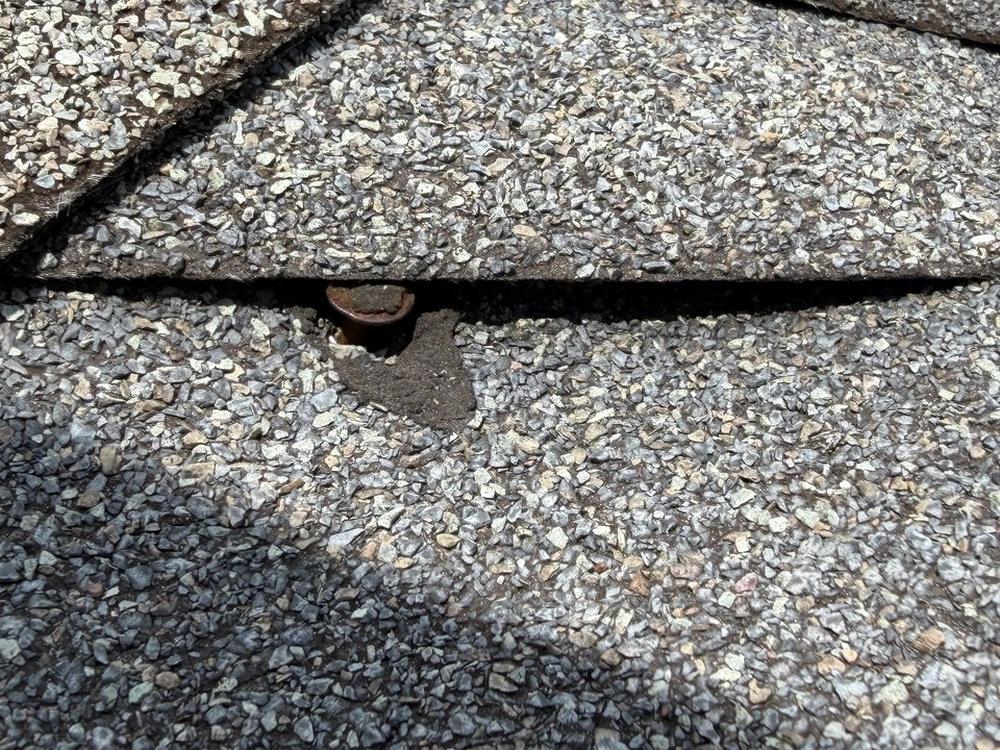
It is usually a slow leak: a little water in each hard rain, soaking into the decking around the nail. Wet wood holds nails worse, so the spot tends to get worse instead of better. The ceiling stain can show up long after the hole opened.
4. The Right Repair
A dab of caulk over the nail head is a common fix and a poor one. Sealant left out in the sun dries and cracks, and the loose nail underneath keeps moving. Hammering the nail back down through the shingle is no better. The hole in the wood is already worn loose, and the hammer breaks the shingle. A proper repair goes like this:
- Lift the shingle. Carefully break the seal on the shingle over the nail and raise it just enough to work.
- Pull the nail. Take the popped nail out completely and fill the old hole with roofing cement.
- Set a new nail in solid wood. Drive a new nail of the right length close by, flush with the shingle, not into the old hole.
- Replace the damaged shingle. Any shingle the nail has punctured, cracked or worn through comes out and a new one goes in.
- Seal it back down. Press the loosened shingles into small spots of roofing cement, because the factory seal was broken to do the work. Small spots only. Too much cement can blister a shingle.
5. When There Are a Lot of Them
One or two nail pops on an older roof are routine maintenance. Dozens of them point to something bigger, and the pattern usually says what.
- Scattered over the whole roof: a nailing problem from the day the roof went on, such as wrong gun pressure or nails that were too short.
- In straight lines: pops that follow the edges of the deck boards or panels point to deck movement or to nails that landed in the gaps.
- Bunched in one area, with a soft feel underfoot: wet or failing decking, often with an attic moisture or ventilation problem behind it.
In those cases fixing nails one at a time treats the symptom, and the cause has to be dealt with too. An attic that runs hot and damp may need better ventilation whatever happens to the shingles. On a roof that is due for replacement anyway, the lasting fix is done at the tear-off: bad decking is replaced, the new shingles are nailed with the right nails, and the attic ventilation is corrected.
6. Is a Nail Pop Storm Damage?
No. Nail pops come from how the roof was nailed and how the wood under it moves. Hail does not cause them. They often get noticed during a storm inspection because that is the first time anyone has looked at the roof closely. They are worth fixing. They are just not part of a storm claim. Wind is a different matter: a shingle that a popped nail was holding loose is easier for wind to tear off, and a torn or missing shingle after a storm gets photographed and documented as wind damage, with the nail under it noted for what it is. If you are sorting out what is hail and what is not, see Hail Impact vs. Blistering: How to Tell Them Apart.
Sources: CertainTeed Shingle Applicator's Manual; Asphalt Roofing Manufacturers Association, Nail Application of Asphalt Shingles and Plain Facts About Buckled Shingles; Haag Engineering, Hail Damage to Asphalt Roof Shingles.
Related guides
Seeing a Bump or a Lifted Shingle?
MATCHWORK™ checks the roof, photographs each popped nail and tells you whether it is a simple repair or a sign of a problem in the deck.
Request an Inspection