Hail Impact vs. Blistering: How to Tell Them Apart
By MATCHWORK™ Roofing & Exteriors · · Updated
After a hail storm, a roof gets a closer look than it has had in years, and every dark spot on a shingle starts to look like a hail hit. Some of them are. Others are blisters, scuffs or plain wear that were there long before the storm. Here is how to tell a hail impact from a blister, and from the other marks that get mistaken for hail.
A hail hit is a bruise. Granules are knocked loose in a roughly round spot, the shingle feels soft there when you press it, the hits are scattered at random, and the softer metal on and around the roof usually shows dents from the same storm. A blister is a bubble that formed in the shingle itself. It is small, it stands up until it pops, and then it leaves a steep-sided pit with firm shingle all around it. Hail is storm damage. Blistering is not.
Every photo in this guide was taken by MATCHWORK™ during a real roof inspection. Close-ups only, nothing staged, no stock photos.
1. What a Hail Hit Looks and Feels Like
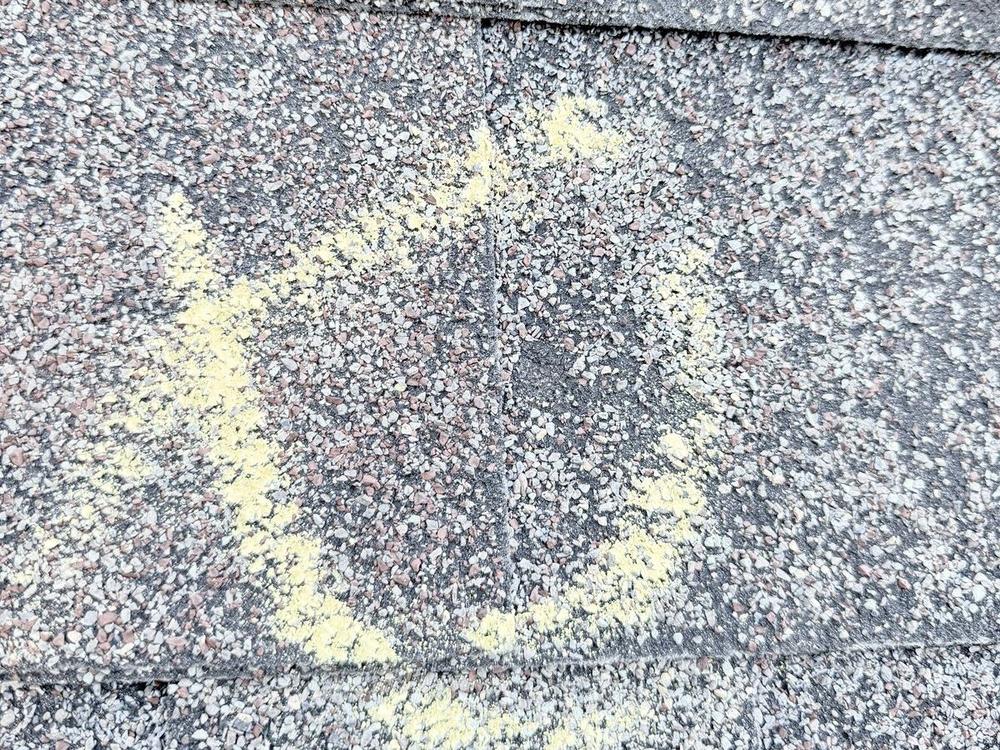
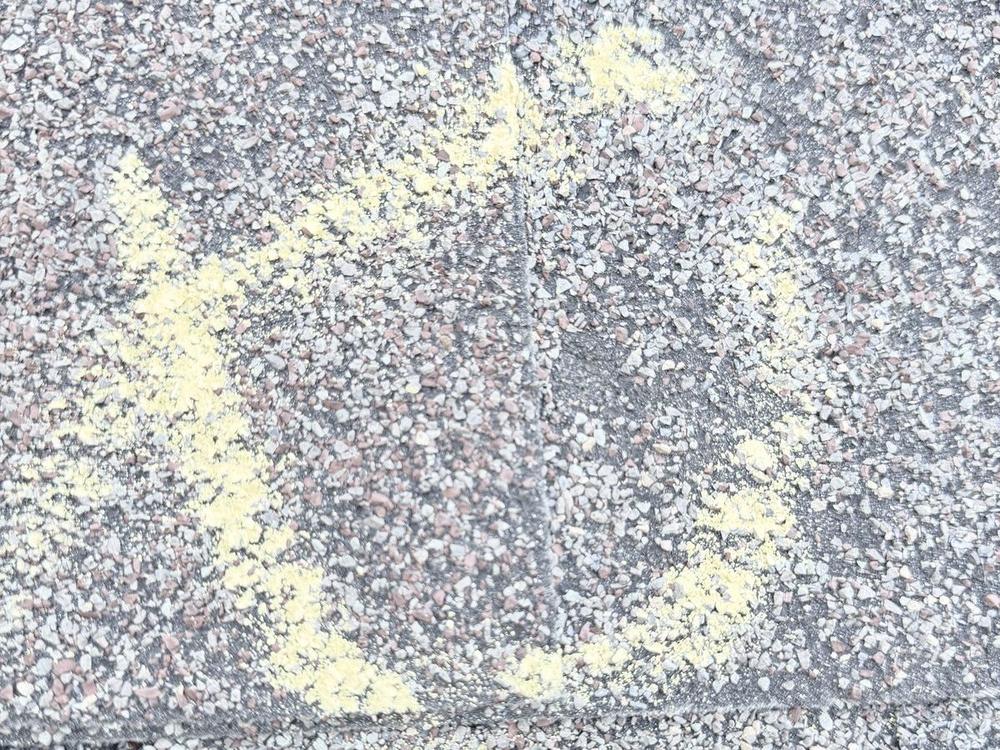
Haag Engineering, whose hail research is widely used by roof inspectors and insurance adjusters, defines hail damage to an asphalt shingle as a puncture, a tear or a bruise. A bruise is a dent with a fracture in the mat underneath, and in Haag's words it "feels soft like that of an apple bruise." These are the signs to look for:
- It gives under your thumb. Press the spot and it feels soft compared with the shingle around it, because the mat under the granules is fractured. This is why hail is checked by hand and not just by eye.
- Granules are knocked out or driven in. The spot is roughly round with a soft, uneven edge. A fresh hit shows black asphalt. After a few months in the weather the exposed asphalt turns gray, which is one way to tell a new hit from an old one.
- It is a shallow dish, not a crater. A hail hit is a slight dent with gently sloped sides, the shape of the stone that made it.
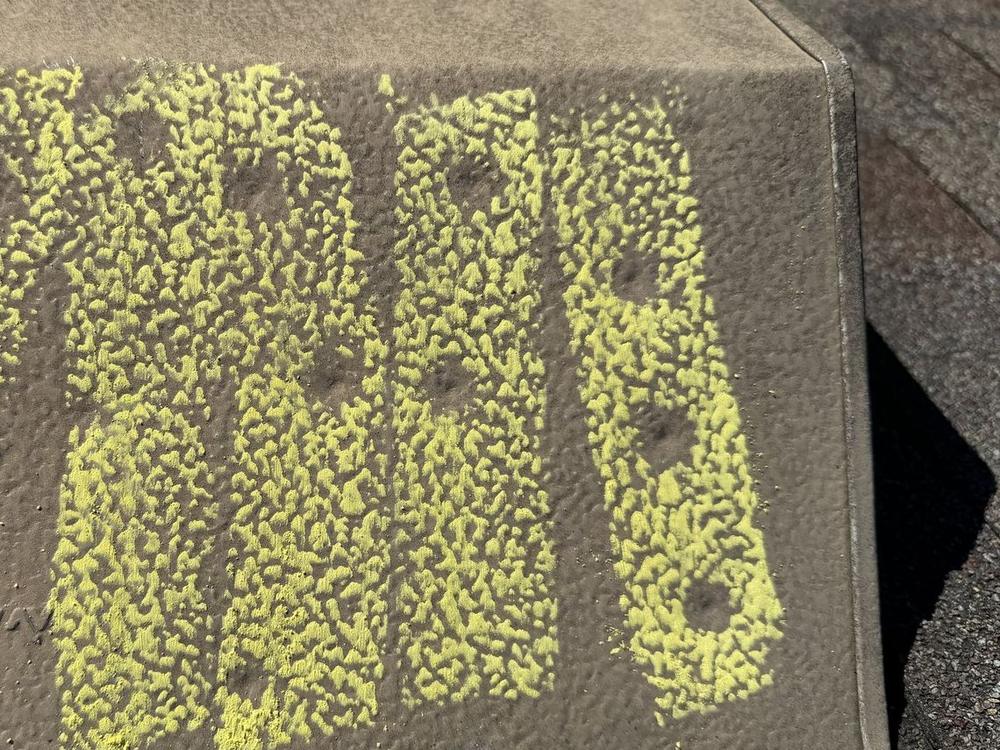
- The hits are scattered. Hail lands at random. It does not line up in rows, follow a path or pick the middle of each shingle. The slopes that faced the storm take the most hits and the hardest ones. The sheltered slopes take fewer.
- The metal agrees. Hail that bruises shingles also marks the softer things around them: roof vents, flashing, gutters, downspouts, the fins on the air conditioner, the mailbox. Those marks should fit the size and direction of the hits on the roof. When shingles are spotted but no metal anywhere is marked, look harder at what the spots really are.
2. What a Blister Looks Like
A blister starts inside the shingle. Moisture or gases trapped in the asphalt expand when the roof gets hot and push up a small bubble under the granules. Heat is what drives it, so a hot, poorly vented attic makes blistering worse. Nothing struck the shingle, and that is the whole difference.
- Closed, it is a small raised bubble. Granules still cover it. Most blisters are 1/4 inch across or smaller, about the size of a pencil eraser. Hail pushes a shingle down. A blister stands up.
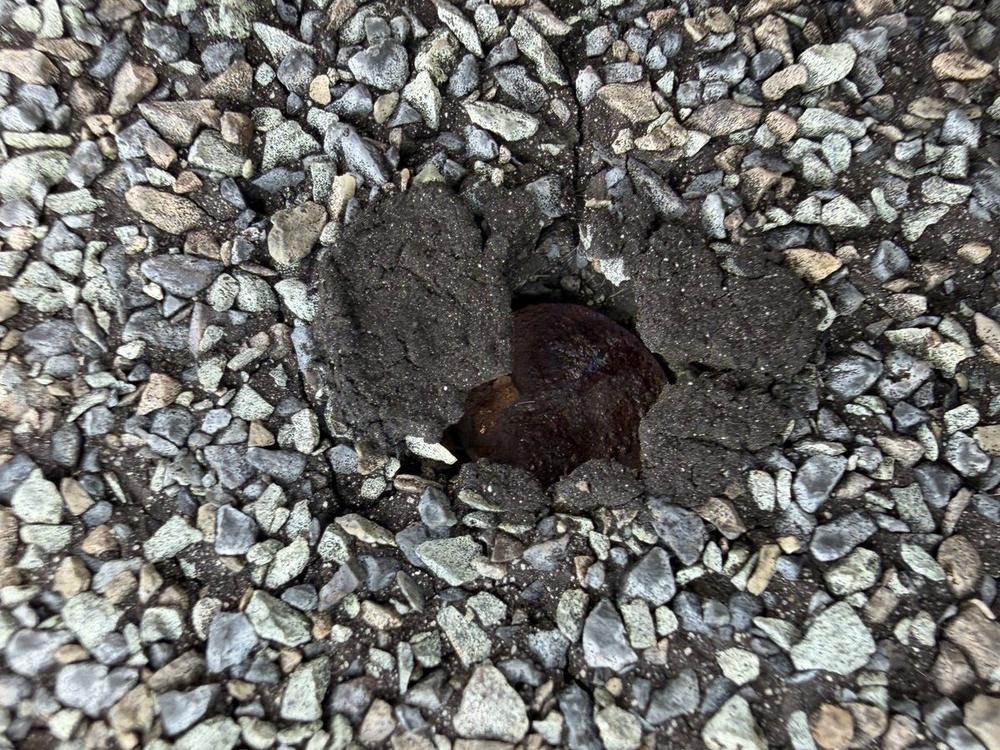
- Popped, it is a pit with steep sides. The top of the bubble wears off and takes its granules with it. What is left is a small crater with sharp, steep edges, often open all the way down to the mat.
- The shingle around it is firm. Press next to a blister and nothing gives. There is no bruise.
- It ignores the storm. Blisters show up where the roof runs hot, often many of them close together, on any slope and whichever way the storm came from. Nothing on the gutters or vents matches them.
Blisters are not harmless. Open ones expose asphalt to the sun, and a slope covered in them wears out sooner than it should. Better attic ventilation takes away some of the heat behind the problem, and a badly blistered slope eventually needs new shingles. It is a real roof problem. It is just not a storm problem.
3. Side by Side
Three questions sort most marks. Is it soft when you press it? Does it dent in, or does it stand up? Does the metal around the roof show the same storm?
Hail Impact
- • Feel: soft, like a bruise on an apple
- • Shape: shallow dent with gently sloped sides
- • Granules: knocked loose or driven in; fresh asphalt shows black
- • Pattern: random, heaviest on the slopes that faced the storm
- • Around the roof: dents from the same storm on vents, gutters, downspouts and AC fins
Blister
- • Feel: firm, no soft spot
- • Shape: raised bubble, or a steep-sided pit once it pops
- • Granules: lifted on the bubble, gone from the pit
- • Pattern: any slope, grouped where the roof runs hot
- • Around the roof: nothing on the metal to match
4. Other Marks That Get Mistaken for Hail
- Foot traffic and scuffs. Someone walked the roof on a hot day or dragged something across it. The mark is smeared or stretched out instead of round, the soft asphalt is pushed to one side with a small ridge at the edge, and the marks follow the paths people take to vents, chimneys and skylights. There is no bruise under it.
- Nail pops. A nail backing out of the deck pushes up a hard bump and can wear the granules off the top of it or poke through. It is raised and hard with a nail head under it, usually near the bottom edge of a shingle. More in Nail Pops Explained.
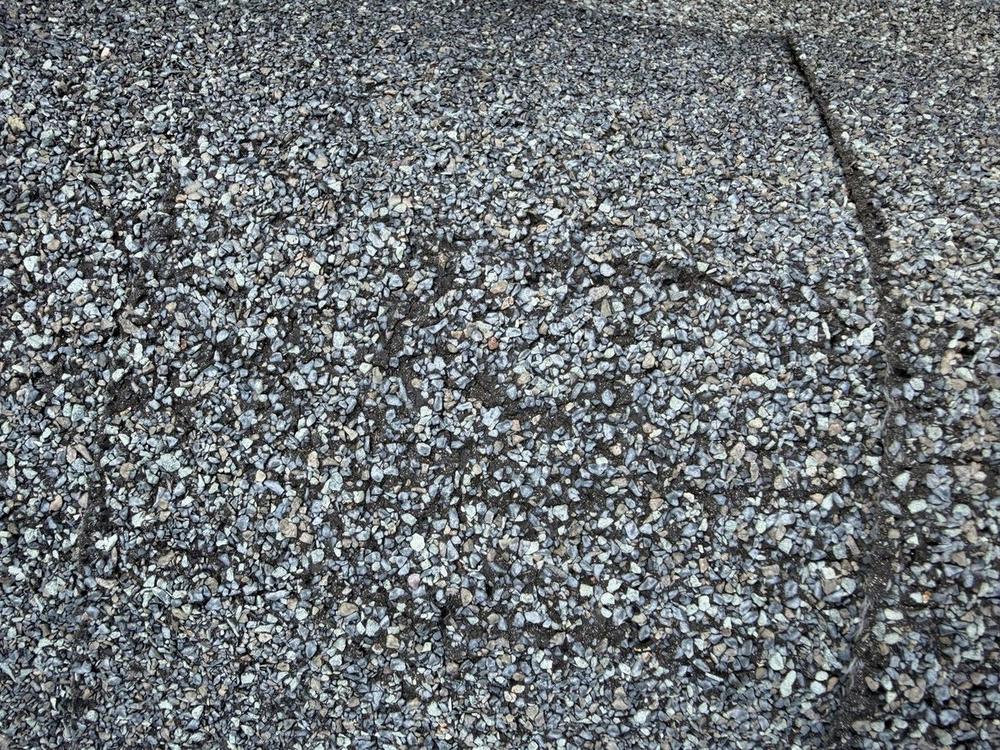
- Age and granule wear. Old shingles thin out evenly across whole slopes, crack in a fine pattern, curl at the edges and shed granules in flakes. Wear is everywhere and gradual. Hail is separate spots. See what granule loss looks like.
- Sealant spots. A drip of shingle sealant leaves a round dark spot. Where the sealant on one shingle stuck to another and the two were later pulled apart, a round patch of granules comes off with it. Both are round and dark, and neither has a bruise under it.
5. How an Inspection Sorts It Out
A proper hail inspection starts on the ground with the gutters, downspouts, air conditioner, mailbox and window screens. On the roof, the method Haag teaches is a 10-foot by 10-foot test square on each slope direction, with every shingle inside the square checked by hand for soft spots. Each hit is marked in chalk, counted, and photographed from far, middle and close range with something in the picture for scale.
One mark does not decide a roof. The count on each slope, the direction the hits came from and the metal around them are the rest of the inspection.
Blisters, scuffs and nail pops get photographed too, and labeled as what they are. That is how MATCHWORK™ inspects a roof after a storm. Please do not climb up to try the thumb test yourself. Shingles are easy to damage underfoot and slopes are easy to fall from.
6. Why the Difference Matters for an Insurance Claim
Most homeowner policies cover sudden storm damage, and hail is a textbook example. They do not pay for wear, age or defects in the material, and blistering falls on that side of the line. Your own policy decides the details. MATCHWORK™ documents what is on the roof, labels each mark for what it is, and puts that evidence in front of the carrier.
Two mistakes cost homeowners here:
- Calling blisters hail. An adjuster who finds blisters circled as hail has a reason to doubt every other photo in the file. A claim is stronger when it counts only what is real.
- Calling hail blisters. A roof can have both. Blisters that were there before the storm do not cancel real hail hits that came with it. If a spot is a soft bruise, scattered at random, with marked metal to match, it is hail, and it should be counted even if the next shingle over has a blister on it.
Sources: Haag Engineering, Hail Damage to Asphalt Roof Shingles and the test square method; InterNACHI, Mastering Roof Inspections: Asphalt Composition Shingles; Asphalt Roofing Manufacturers Association, Residential Asphalt Roofing Manual; National Association of Insurance Commissioners, A Consumer's Guide to Home Insurance.
Related guides
Not Sure What You're Looking At?
MATCHWORK™ inspects the roof by hand, photographs what is there, and shows you which marks are hail and which are not.
Request an Inspection