What Shingle Granule Loss Actually Looks Like on Aging Central Ohio Roofs
By MATCHWORK™ Roofing & Exteriors · · Updated
Colored grit in the gutters or at the bottom of a downspout means your shingles are shedding granules. All shingles do, from the day they are made. The question is whether you are seeing normal shedding or a roof that is wearing through, and you answer it by looking at the shingles, not the gutter.
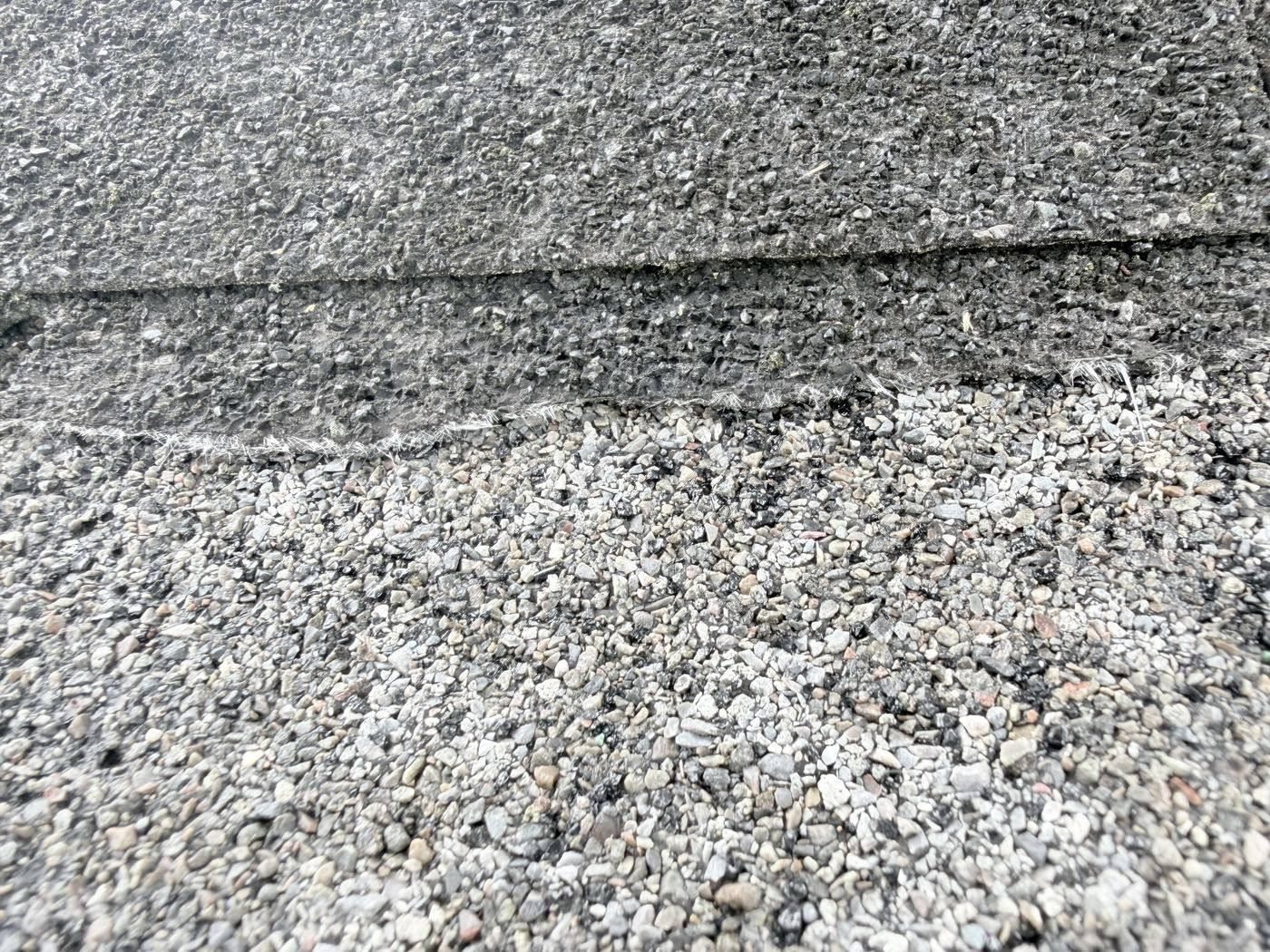
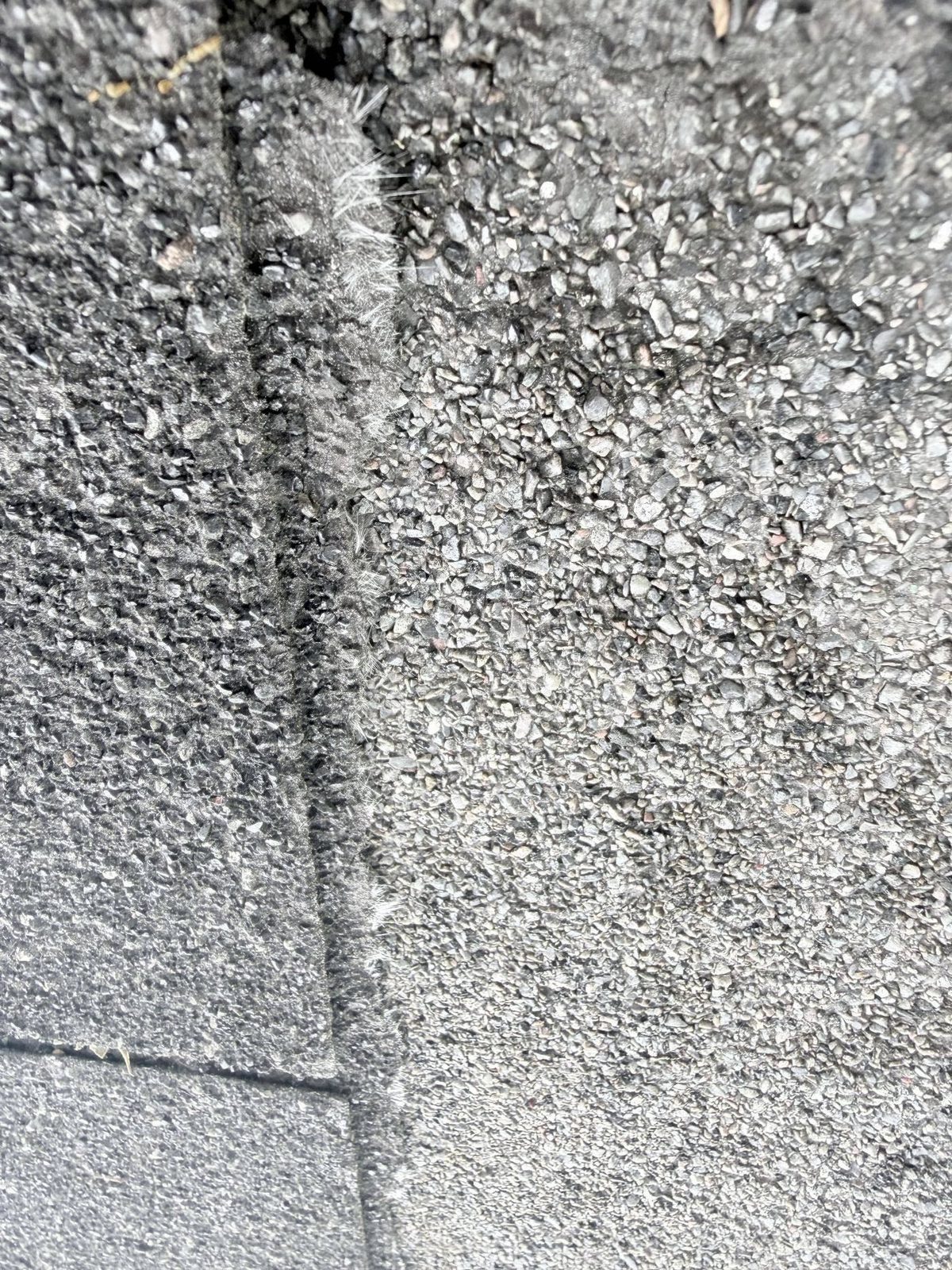
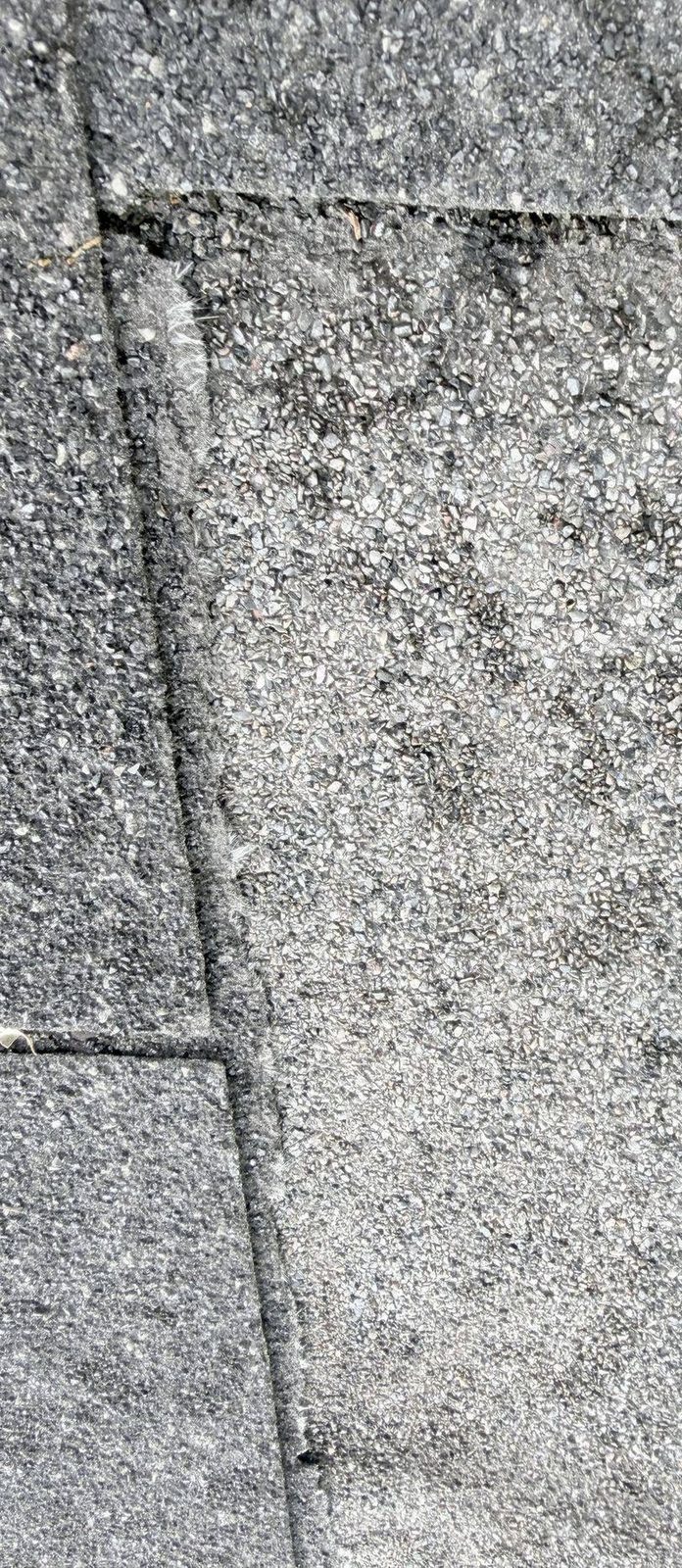
Granules in the gutter are normal, especially on a new roof. Bare spots on the shingles are not. Where you can see black asphalt or the threads of the fiberglass mat, the sun protection is gone in that spot. One bare patch from a scuff or a tree branch is a repair. Bare patches across whole slopes mean the roof is near the end.
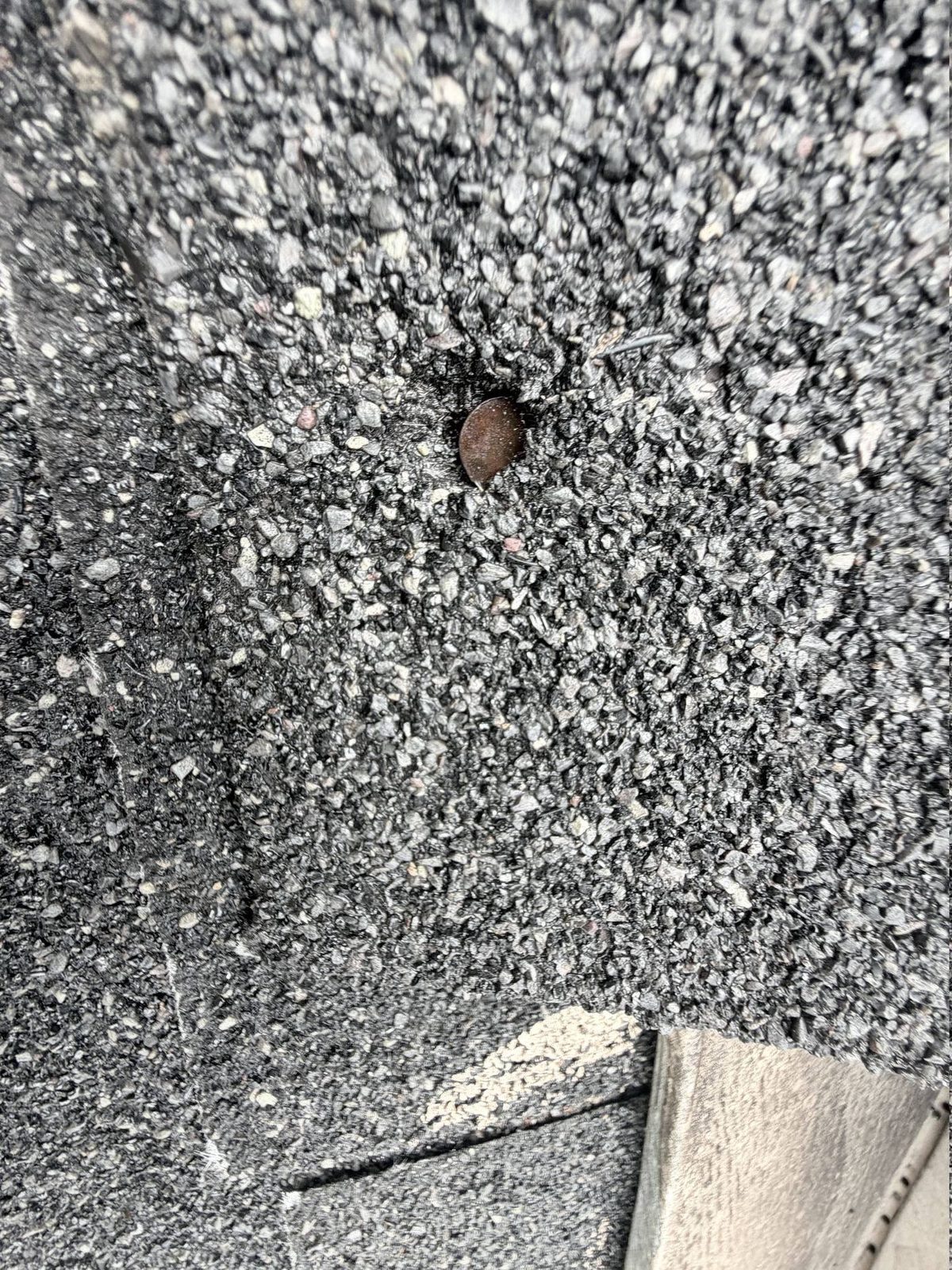
Every photo in this guide was taken by MATCHWORK™ during a real roof inspection. Close-ups only, nothing staged, no stock photos.
1. What the Granules Do
Granules are crushed rock with a baked-on ceramic color coating, pressed into the hot asphalt when the shingle is made. They make up about a third of a shingle's weight, and they do three jobs:
- Block the sun. Asphalt breaks down under ultraviolet light, and the granules are its shield. CertainTeed's installer manual says that without that layer, shingles "would fail very quickly."
- Help with fire resistance. A shingle roof's fire rating belongs to the whole roof assembly, and the granule surface is part of it. The Insurance Institute for Business & Home Safety notes that losing granules can lower a shingle's fire resistance classification.
- Give the roof its color. All of the color you see is the granules. Some carry copper to resist algae streaks.
2. Normal Shedding: What It Looks Like
Shingles are made with more granules than will stay stuck, so the asphalt is completely covered. The loose extras, called hitchhikers in the trade, ride along in the bundle and wash off during the first few years on the roof. A new roof can put a surprising amount of grit in the gutters after its first hard rains. That is normal, and it takes nothing off the life of the shingles.
After that, a roof keeps shedding a little at a time for the rest of its life. There is room for it. When Haag Engineering wire-brushed granules off new shingles, about 12 to 15 percent of the surface granules had to come off before any asphalt showed. The test for normal is simple: the shingles are still an even color and fully covered, with no dark or bare patches.
3. Real Loss: What It Looks Like
Granule loss becomes a problem when the coating under the granules is exposed. It shows up in a few distinct ways, and each one points to a different cause.
- Bald spots. Patches where the granules are gone and the asphalt shows. Freshly exposed asphalt is black. After months in the weather it turns gray, and in time the pale threads of the fiberglass mat show through.
- Loss in a line. A scuffed trail where people walked, most often from foot traffic on a hot day when the asphalt was soft. A rubbed streak under a tree limb that touches the roof. A washed stripe below an upper-story downspout that empties onto a lower roof.
- Round spots after a storm. Hail knocks granules loose where it hits. If the spot is also soft when pressed, it is a hail bruise. See Hail Impact vs. Blistering.
- Small pits. Popped blisters leave pits about the size of a pencil eraser or smaller, with steep sides, each one missing its granules. Many together give the shingle a peppered look.
- Spots over nail pops. A nail backing out of the deck pushes up a hard bump, and the granules wear off its top. See Nail Pops Explained.
- Flaking and cracking with age. As asphalt ages it shrinks. The surface cracks in a fine pattern, the edges curl, and granules come off in flakes and leave the mat exposed.
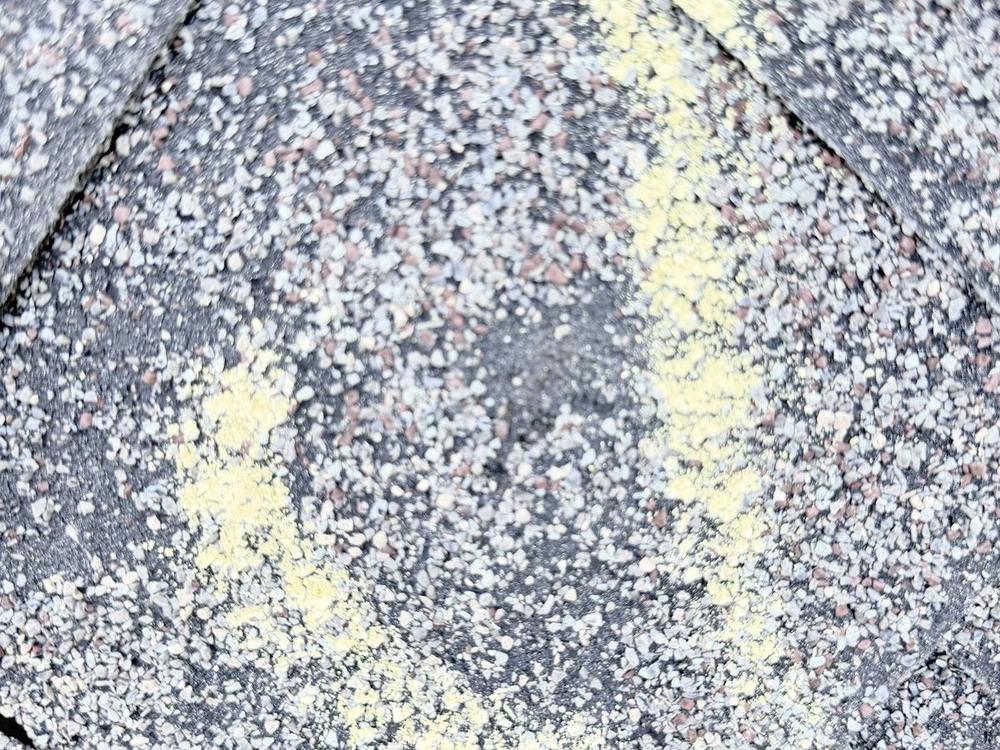
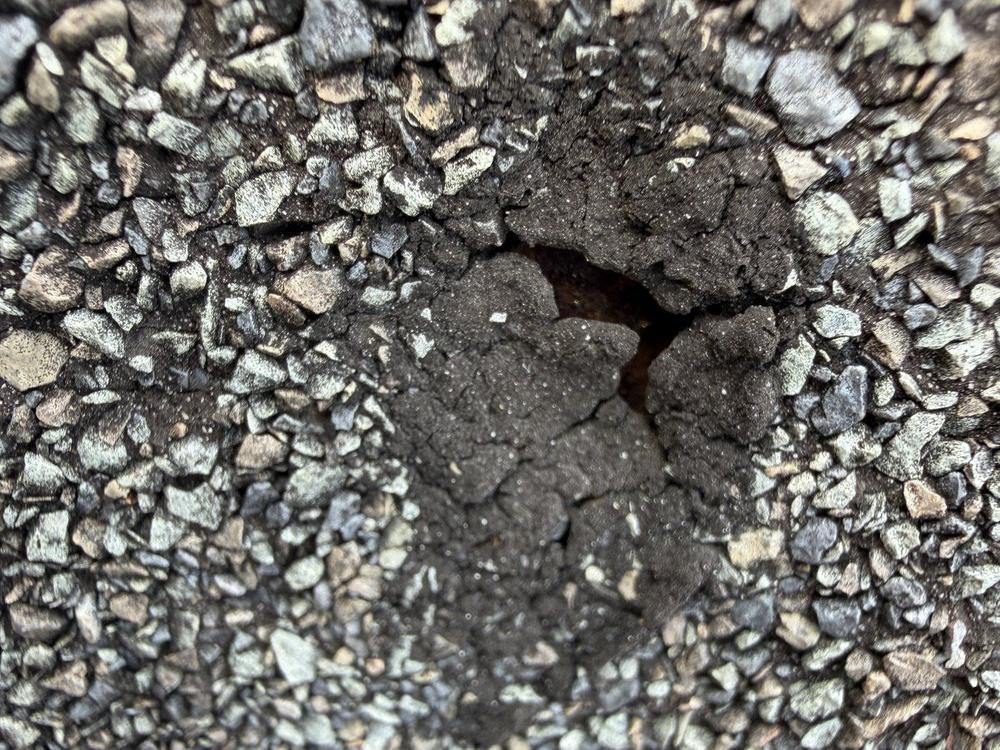
Normal
- • Grit in the gutters of a roof in its first few years
- • A light sprinkle at the downspout after a hard rain
- • Shingles an even color, fully covered, on every slope
Not Normal
- • Black or gray bare patches on the shingles
- • Pale fiberglass threads showing
- • Streaks, trails or round spots with the granules gone
- • Bare areas along with curled, cracked or brittle shingles
4. What to Check From the Ground
- The gutters and downspout outlets. A little grit is normal. Piles that keep growing on an older roof are worth a closer look. A heavy wash of granules right after a hail storm, from a roof that was not shedding much before, is a reason to have the shingles checked for hits. Granules in the gutter do not prove hail on their own, and a clean gutter does not rule it out.
- Each slope, in good light. Binoculars help. Look for dark patches, streaks and areas where the color looks washed out or uneven.
- The sunny sides against the shady sides. Slopes that face south and west take the most sun and usually wear first.
- Under trees and below upper downspouts. Those are the usual places for loss in a line.
- The age of the roof. The same bare spot means something different at 8 years than at 22.
Stay off the roof to check. Walking on worn shingles knocks more granules loose, and it is an easy place to fall.
5. When It Means the Roof Is Near the End
Granule loss is slow. A bare spot will not leak the day it shows up, but with its sun protection gone that spot wears faster than the roof around it. So a bald patch is a reason to plan, not a reason to panic. One scuffed or limb-rubbed area on an otherwise sound roof is a repair: those shingles are replaced and the rest of the roof carries on.
The roof is near the end when the signs add up:
- Bare areas show across whole slopes, not in a spot or two.
- The fiberglass mat is visible.
- The loss comes with curled edges, cracks or shingles that have gone brittle.
- The roof is more than 20 years old, the age at which the Asphalt Roofing Manufacturers Association says a residential roof is a prime candidate for reroofing.
One note on insurance: most homeowner policies cover sudden storm damage such as hail and do not pay for wear and age, so granule loss from age is generally not covered. Granules knocked off at a hail bruise are part of the hail damage. Telling the two apart takes a close inspection, and MATCHWORK™ documents each mark for what it is and puts that evidence in front of the carrier.
Sources: CertainTeed Shingle Applicator's Manual; Haag Engineering, Hail Damage to Asphalt Roof Shingles; Asphalt Roofing Manufacturers Association, Residential Asphalt Roofing Manual and FAQ; Insurance Institute for Business & Home Safety, Hail no! (Professional Roofing, March 2022); National Association of Insurance Commissioners, A Consumer's Guide to Home Insurance.
Related guides
Seeing Bare Spots or Grit in the Gutters?
MATCHWORK™ inspects the roof, photographs what is there, and tells you plainly whether it is normal wear, a repair or a roof that is near the end.
Request an Inspection